微服务框架介绍
李国平 2017/6/18 java
[TOC]
# 目录结构说明
├── ith-boot-starter           # starter预配置通用组件
│   ├── db-ith-boot-starter    # 数据库
│   ├── ith-spring-boot-starter# 对业务微服务 通用预配置
│   ├── mq-ith-boot-starter    # mq消息组件
│   ├── redis-ith-boot-starter # redis组件
│   └── shiro-ith-boot-starter # 用户会话组件
├── ith-service-gateway        # 服务网关
├── ith-service-system         # 基本业务服务
├── ith-service-auth           # 登录认证授权服务
├── ith-service-file           # 文件上传存储服务(支持OSS)
├── ith-common                 # 通用的jar
│   │── ith-common-core        # 核心jar
│   └── ith-common-domain      # 通用的 model enum dto (如:用户当前会话对象类在该jar中)
├── ith-service-xxx            # 其他业务微服务中心
│   ├── xxx-web                # 微服务主入口 依赖:xxx-service
│   ├── xxx-service            # 业务逻辑层 依赖:xxx-dao
│   ├── xxx-dao                # 数据库持久层  mappen.xml 和 接口类 依赖:xxx-domain
│   ├── xxx-domain             # model、dto、enum 都放在这 领域层
│   ├── xxx-common             # 只用于该服务下通用处理类
│   └── xxx-api                # 调用其他微服务的 openfiegn 接口调用 依赖:xxx-domain
# 业务服务结构说明
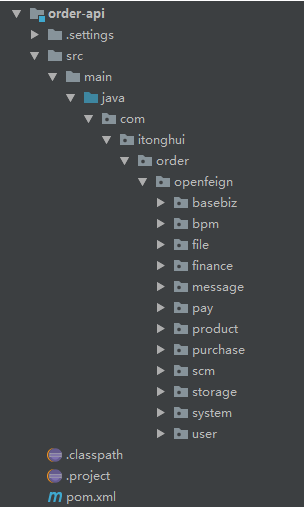
├── xxx-api            				# 调用其他业务微服务
│   ├── com                			# 第一级包名(统一的)
│   │	├── itonghui            	# 第二级包名(统一的)
│   │	│	├── xxx             	# 第三级包名(统一使用该业务微服务名)
│   │	│	│	├── openfeign   	# 第四级包名(统一的,里面放一些需要调用其他服务的feign接口)
│   │	│	│	│	├── xxx   		# 第五级包名(以其他业务服务名为包名,里面放interface接口)

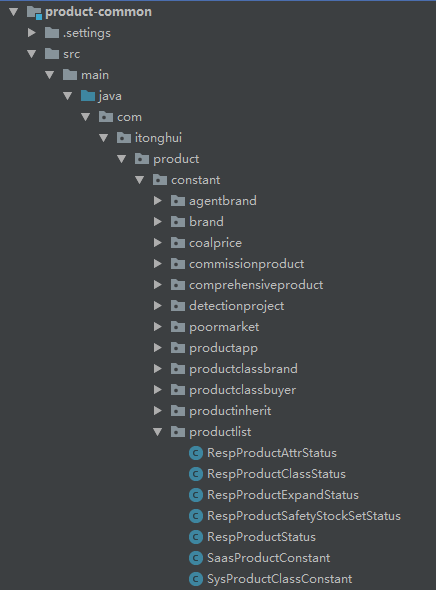
├── xxx-common            			# 该服务下通用处理类
│   ├── com                			# 第一级包名(统一的)
│   │	├── itonghui            	# 第二级包名(统一的)
│   │	│	├── xxx             	# 第三级包名(统一使用该业务微服务名)
│   │	│	│	├── constant   		# 第四级包名(统一的)
│   │	│	│	│	├── xxx   		# 第五级包名(以各个功能为包名,里面放置常量和返回状态等通用处理类)

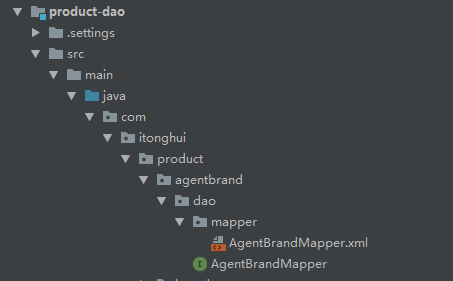
├── xxx-dao            				# 数据库持久层
│   ├── com                			# 第一级包名(统一的)
│   │	├── itonghui            	# 第二级包名(统一的)
│   │	│	├── xxx             	# 第三级包名(统一使用该业务微服务名)
│   │	│	│	├── xxx   			# 第四级包名(以各个功能为包名)
│   │	│	│	│	├── dao   		# 第五级包名(统一的,放置接口和xml文件)
│   │	│	│	│	│	├── mapper  # 第六级包名(统一的,里面放置mapper.xml文件)

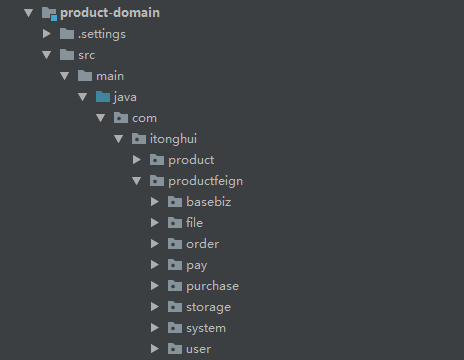
├── xxx-domain            			# model、dto、enum 都放在这 领域层
│   ├── com                			# 第一级包名(统一的)
│   │	├── itonghui            	# 第二级包名(统一的)
│   │	│	├── xxx             	# 第三级包名(统一使用该业务微服务名)
│   │	│	│	├── xxx   			# 第四级包名(各个功能为包名)
│   │	│	│	│	├── dto   		# 第五级包名(统一的)
│   │	│	│	│	├── enums   	# 第五级包名(统一的)
│   │	│	│	│	├── model   	# 第五级包名(统一的)
│   │	│	├── xxxfeign            # 第三级包名(统一使用该业务微服务名+feign标识)
│   │	│	│	├── xxx   			# 第四级包名(以其他业务服务名为包名)
│   │	│	│	│	├── dto   		# 第五级包名(统一的)
│   │	│	│	│	├── enums   	# 第五级包名(统一的)
│   │	│	│	│	├── model   	# 第五级包名(统一的)

├── xxx-service            			# 业务逻辑层
│   ├── com                			# 第一级包名(统一的)
│   │	├── itonghui            	# 第二级包名(统一的)
│   │	│	├── xxx             	# 第三级包名(统一使用该业务微服务名)
│   │	│	│	├── xxx   			# 第四级包名(以各个功能为包名)
│   │	│	│	│	├── business   	# 第五级包名(统一的,放置biz逻辑接口和biz逻辑实现类)
│   │	│	│	│	│	├── impl  	# 第六级包名(统一的,里面放置biz逻辑实现类)
│   │	│	│	│	├── service   	# 第五级包名(统一的,放置service接口和service实现类)
│   │	│	│	│	│	├── impl  	# 第六级包名(统一的,里面放置service实现类)

├── xxx-web            				# 微服务主入口
│   ├── com                			# 第一级包名(统一的)
│   │	├── itonghui            	# 第二级包名(统一的)
│   │	│	├── xxx             	# 第三级包名(统一使用该业务微服务名)
│   │	│	│	├── web   			# 第四级包名(统一的)
│   │	│	│	│	├── xxx   		# 第五级包名(以各个功能为包名,各功能的Controller)
│   │	│	│	│	├── feign  		# 第五级包名(统一的,放置本服务的feign类)

web下面有个resources包,放置一些枚举、返回状态、校验的国际化
├── resources
│   ├── res                			# 第一级包名(统一的)
│   │	├── i18n            		# 第二级包名(统一的)
│   │	│	├── enums             	# 第三级包名(统一的)
									# 英文国际化:命名格式为 功能名称+EnumsMessage_en.properties
									# 中文国际化:命名格式为 功能名称+EnumsMessage_zh_CN.properties
│   │	│	├── resp             	# 第三级包名(统一的)
									# 英文国际化:命名格式为 功能名称+RespMessage_en.properties
									# 中文国际化:命名格式为 功能名称+RespMessage_zh_CN.properties
│   │	│	├── validation          # 第三级包名(统一的)
									# 英文国际化:命名格式为 功能名称+ValiMessages_en.properties
									# 中文国际化:命名格式为 功能名称+ValiMessages_zh_CN.properties
# 例子:
xxx - api
xxx - common
xxx - dao
xxx - domain
xxx - service
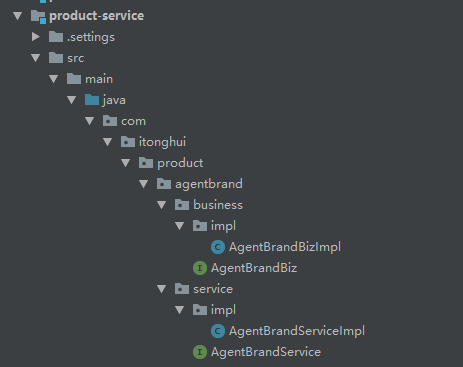
xxx - web
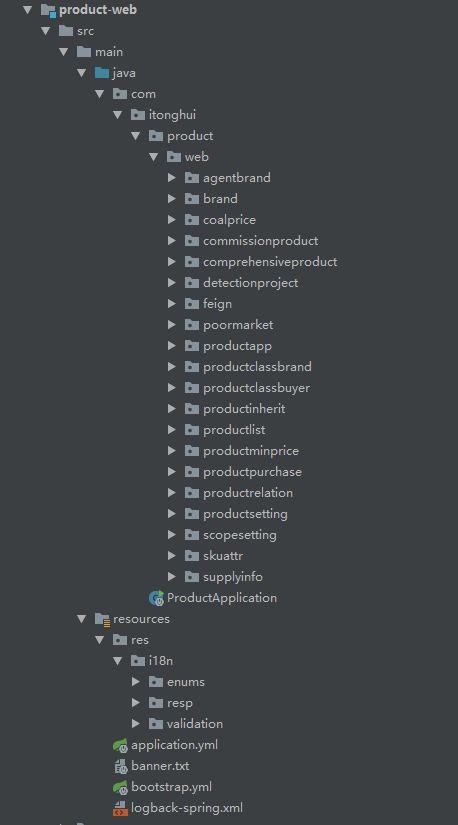
# API接口URL定义规则
public class ApiUrlConstant {

	/** 公开接口 ex:/api/{你的服务名}/{业务功能名} */
	public static final String API = "/api";

	/** 会话验证 会员接口  ex:/api/member/{你的服务名}/{业务功能名} */
	public static final String API_MEMBER = API + "/member";

	/** 会话验证 管理接口  ex:/api/admin/{你的服务名}/{业务功能名} */
	public static final String API_ADMIN = API + "/admin";

	/** 会话验证 通用接口  ex:/api/authen/{你的服务名}/{业务功能名} */
	public static final String API_AUTH = API + "/authen";
}
# “bootstrap.yml” 配置文件说明
server:
  port: 8083 #服务启动端口
spring:
  application:
    name: ith-service-system  #服务名称 命名规范 ith-service-{你的服务名称小写}
  profiles:
    active: dev  # 运行环境 (dev 开发环境,text测试环境,prod生产环境)
  cloud:
    nacos:
      server-addr: 192.168.0.196:10002 # nacos 服务注册中心 地址
      discovery:
        group: DEFAULT_GROUP # 服务发现分组 openfeign 远程调用通过分组进行隔离 调用自己组的服务
      config:  # 配置文件
        file-extension: yaml   # 配置文件后缀名
        shared-configs: #通用配置文件
        - ith-service-datasource-${spring.profiles.active}.yaml  # 数据库配置文件
        - ith-service-redis-${spring.profiles.active}.yaml # redis配置文件
        - sentinel-${spring.profiles.active}.yaml # 限流熔断配置文件
        - zipkin-${spring.profiles.active}.yaml # 全链路跟踪配置文件
management:
  endpoints:
    web:
      exposure:
        include: '*' # 默认配置加上 用于中间件服务 发现监控统计数据
在各自的微服务中可以添加自己的配置文件,在nacos 的配置中心里添加配置文件 ,
文件命名规则:“bootstrap.yml” 里的 ${spring.application.name}-${spring.profiles.active}.yaml 的组合
示例:“ith-service-system-dev.yaml”